Five Questions With Humanitarian And Advocate Emma Barrett Palmer
Published by
Global Health Aging
on
Name: Emma Barrett Palmer Places Lived: UK (St. Albans, Nottingham, London, Canterbury), France, Guadeloupe Hobbies: Music, Art, Photography Culture, Dancing Favorite Movie: The Commitments
Emma’s vision has taken her and her family on a voyage of discovery, connecting stars and celebrating culture. As a graduate in Law who was told she asked too many questions, Emma has been a committed advocate and activist for systems change for over two decades. She was co-founder and programme lead for the first Social Innovation Lab in UK government with aspirations to “change the system”. Despite some project successes, notably with The Dementia Diaries, after ten years Emma concluded that marginalised voices would always be silenced by government systems, process and procedure. Volunteering in Refugee camps on the borders of Northern France in the winter of 2015 compelled a radical professional change. By August 2017, Emma had done the unthinkable and quit her secure role in government to become a full-time family activist, setting up humanKINDER Limited as a vehicle to continue her work for systems change. Emma lived and worked on the road with her family for a year, travelling with The Welcome Tent, a 1956 army catering tent repurposed for peace, preparing, cooking and sharing “Recipes of HOPE” with families who had been forcibly displaced from their homelands. Food was the universal language, a catalyst for conversations about love, life and survival. In 2018, the 16,000 mile journey ended in Chamonix-Mont-Blanc and Recipes of HOPE was awarded an international design prize by Design Indaba and European Academy of Design. The global pandemic, a house move and a new baby meant a project hiatus, but now work has started afresh to curate the hopes, dreams and recipes shared during the journey into a book, Recipes of HOPE. Emma’s proudest professional achievement was delivering a keynote speech entitled “Decolonising Design” to a global audience at the European Academy of Design in 2018. Her proudest personal achievement has been to face her fears after birth trauma and have another baby. Music is Emma’s first love – as an Alto Sax player with a passion for The Blues and Lead Singer in Celtic Breton Rock Band Arvester. Emma and husband Chef Spark are currently renovating a chalet and peace garden in the Alps in the spirit of The Welcome Tent. Connect with Emma on LinkedIn, Instagram, and X.
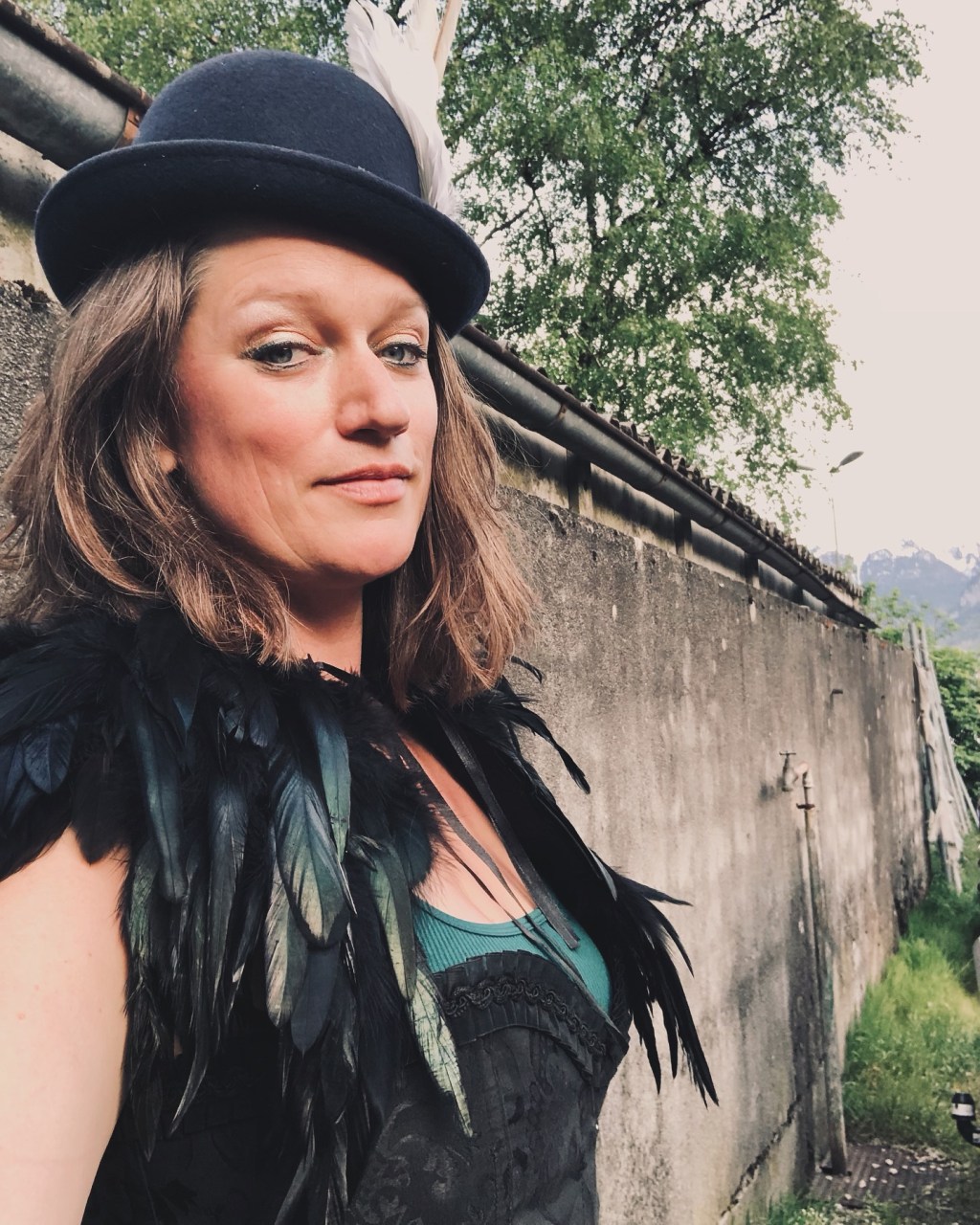
The Welcome Tent at the Ascensions Festival, Chamonix-Mont-Blanc, May 2024
Tell us about your background/ understanding in social innovation
I’ve always believed that the whole is greater than the sum of its parts. For me, social innovation is about caring, creating together and a genuine togetherness where people are able to reveal and liberate each other through an exchange of words, ideas, teachings and inspiration: co-curation, co-creation and co-liberation. I think some of the most important social innovations are about reminding ourselves of older, traditional, ideas and concepts, and applying or contextualising them in this era, or to reveal insight which will support future generations to be more human. I think social innovation has never been more important as a tool to address the disparities and systemic injustices betwixt and between different peoples in our society. We must use evidence that is drawn from and representative of diverse cultural perspectives, revealing and listening to silenced voices to inform a narrative that is inclusive of all walks of life. I was a member of the co-design team for thew first social innovation lab in UK government back in 2007. I had a background in youth and community work, teaching and applied social research but had never even heard of social innovation as a concept when I started. Yet, I found social innovation to be at the intersection of all the things I believed passionately in and I went on to lead the Social Innovation Lab Kent programme for ten years. 2. Why did you choose to leave your role?
Although our impact was felt regionally, nationally and our projects and design methodology were shared as best practice around the world, while in government, I found certain issues noticeable in their absence in the innovation space – climate change, systemic racism and food systems. In the winter of 2015 – seeing thousands of displaced Humans stuck in Calais Refugee camp brought these systemic issues to a head. The subsequent Political manoeuvring in the face of International Human Rights law compelled me to quit my government role and pursue an inherently more moral, yet risky path. I set up humanKINDER Limited as the vehicle to do this. Between 2016-17 my family – Chef husband Sparky, 6 year old son Felix and our Border Collie – embarked on an epic journey across Europe in our VW Transporter to find some answers. We documented Recipes of HOPE prepared and shared with displaced communities we met during a 16,000 mile journey in The Welcome Tent – an 1956 army catering tent, repurposed for peace.
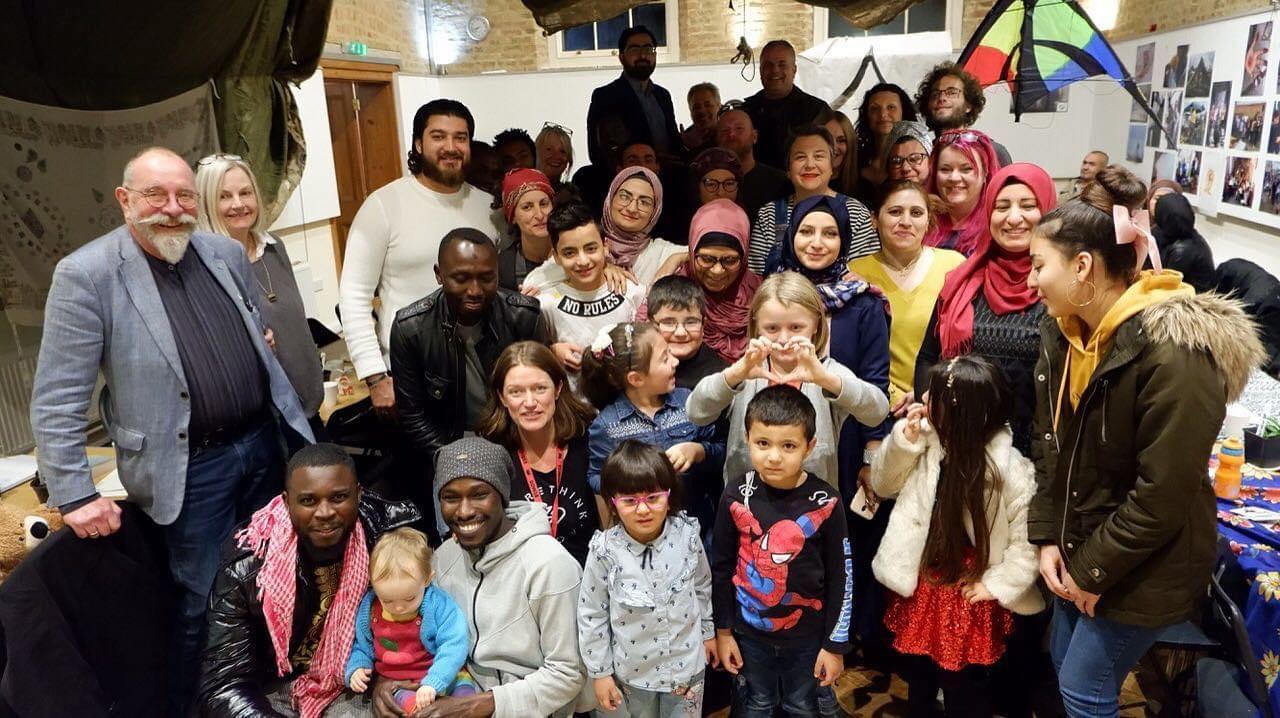
“No Rules” photograph by Debalina Bera – Celebrating the global design prize for Recipes of HOPE awarded by Design Indaba and European Academy of Design
3. How do you find time for self-care?
My family life does not leave much time for self care, but over the years when I feel under the weather, I always realise it is because I haven’t been carving out time for my own self care. I now try to anticipate the signs so that I use self care to prevent a difficult patch as opposed to “firefighting” and using self care as a sticking plaster. Music and being outside in nature are the two things that will always rejuvenate my soul. I have recently became the Lead Singer in a Celtic Band. Self care really does become harder with children – I have a twelve year old and a 2 year old, and I find I have to adapt my own expectations – but without self-care home life and work are impossible.
3. How did the pandemic impact your work or personal life? you can focus on one.
My family is still feeling the impact of the pandemic. Our life profoundly changed direction. I became pregnant and the whole pregnancy was during lockdown in France. The strict confinement pushed us towards making the decision to pursue an ambitious project of buying and renovating a 1950s chalet in the French Alps. Moving house, a renovation project and a new baby were all huge life changes and together they have been rather overwhelming at times! However things are changing, the Vision is back in focus and there is light at the end of the tunnel! Step by step we are transforming this place which is just
50 minutes from Geneva (UN, humanitarian NGO HQs) to include a curated social innovation space, and programme of events, 100% bio and local catered rental apartment, outdoor kitchen, webcam over the mont blanc massif, free range chickens, organic veg, herbs, spices, medicinal plants, open music and arts studio, eco sauna and natural reed-bed water filtration system.
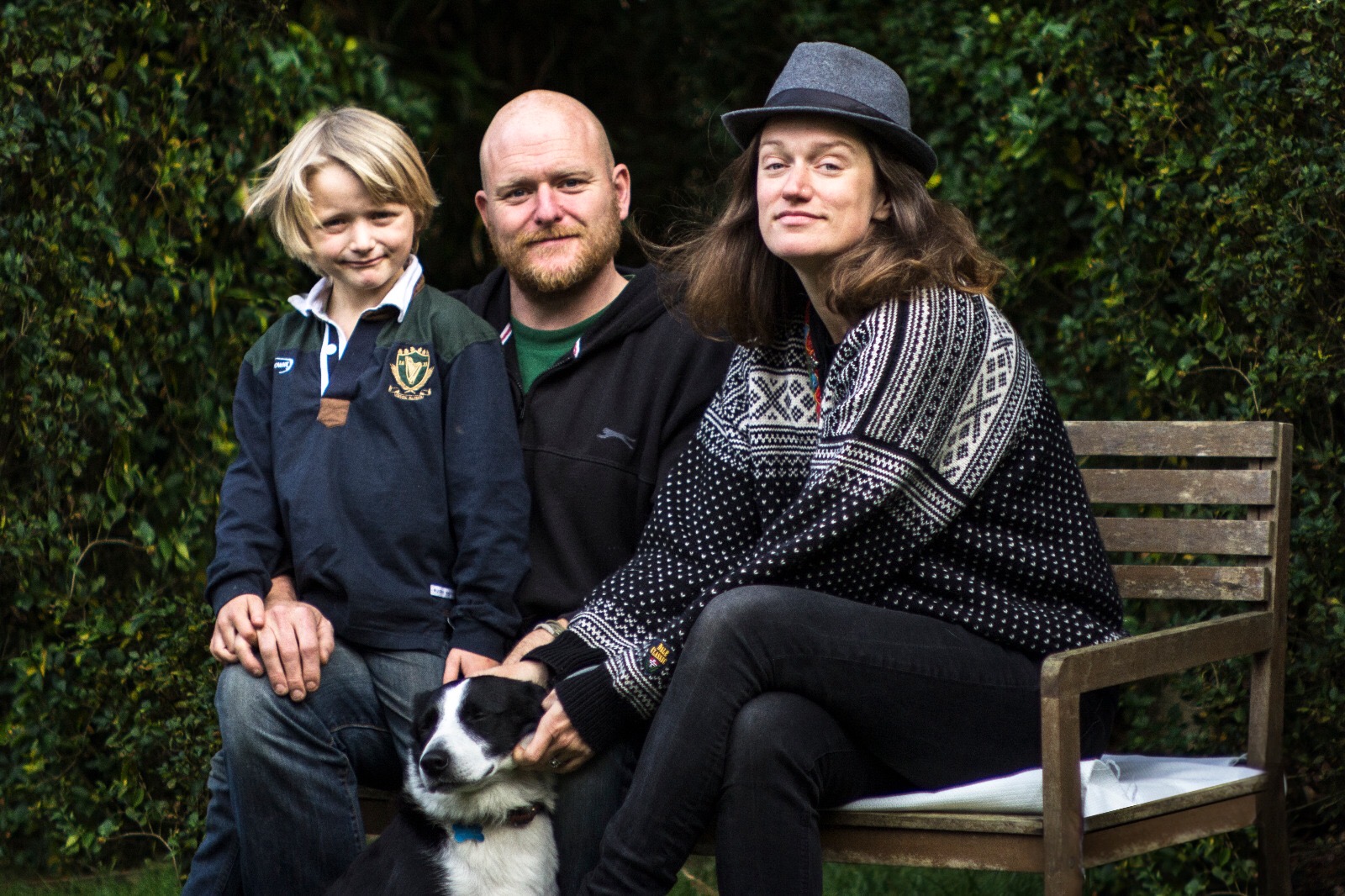
Family portrait by Daisy, Dutch Design Week, 2017
What’s the current update on Recipes of Hope?
From our window we can see Mont Blanc and 5 glaciers – the weather has changed significantly in the last years due to climate change and last summer recorded the highest temperature on record here. These systemic challenges can only be solved together. I believe that using an evidence based approach to create hope through social innovation and food systems interventions could reconnect our fractured society. I remind myself that in 2019 our work was recognised and awarded a global design prize by South African Design Indaba and the European Academy of Design for addressing a submission speaking to “social conscience… grounded in real people and real lives… encouraging people to come together to decide how, where and when to progress… a genuine investment in community engagement with a demonstrable understanding of the global issue of hunger and how food and nutrition connect to 12 of the 17 SDGs”. We are always seeking partnerships who share our values and resonate with our vision, and this year in 2024 our primary objective is to complete our Recipes of HOPE Manuscript as our flagship tool, documented during our 16,000 mile journey across Europe. One hundred cultures are represented – demonstrating an intercultural approach which prioritises fair representation, authenticity and integrity – where food is used to weave diverse cultures together as one. We are currently in talks with a potential sponsor who would support us to complete the book as a catalyst to enable our team to enter into new spaces, to influence new narratives and to host new conversations as a recognised vibrant and diverse global collective.
I think social innovation has never been more important as a tool to address the disparities and systemic injustices betwixt and between different peoples in our society.
One response to “Five Questions With Humanitarian And Advocate Emma Barrett Palmer”
Patrick
Really inspiring, Emma – I always knew you’d be out there challenging injustice and making a real difference. Hope you and the family are doing well. Patrick x




 Global Health Aging
Leave a comment